English
 Deutsch
 Français
 Русский
 Español
 Nederlands
 Português
 العربية
 Italiano
 Polski
Hammock Camping: Straps, Bug Nets and Underquilts
Date:2026.09.29
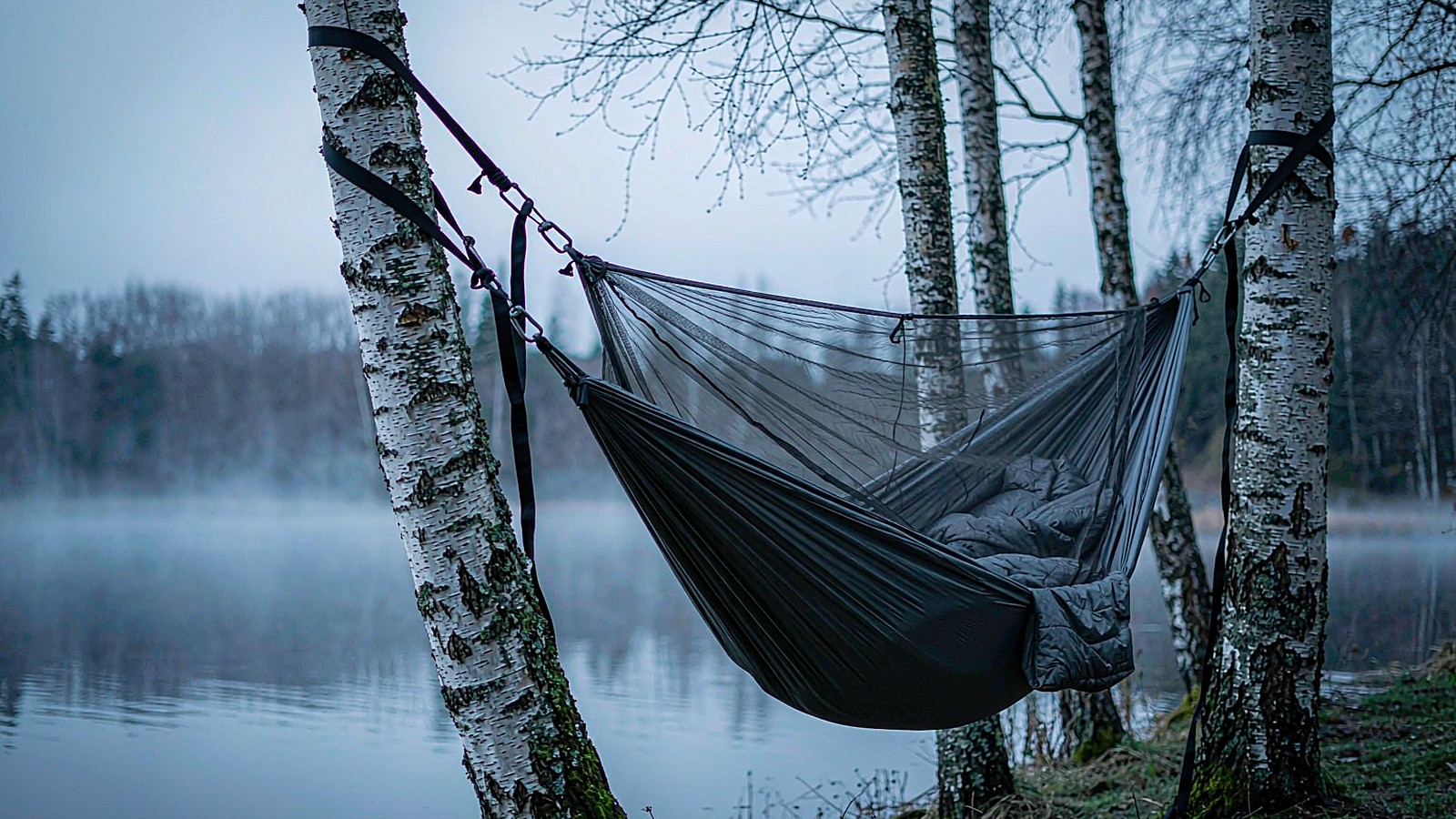
A hammock is one of the lightest ways to sleep outdoors, but the hammock itself is only about half the system. The parts around it are where a set-up succeeds or fails.
Tree straps.Wide, flat webbing protects the bark and is required in many parks and forests; thin cord damages trees and is increasingly banned. Straps are also the item most often missing from an entry-level hammock, so bundling them is an easy way to make a retail pack sensible.
Bug netting.An integrated net with a zip and a ridgeline keeps the product usable in real summer conditions. Look for a net that stays off the face and can be tied back when it is not needed.
Underquilt.This is the part most first-time buyers miss. A sleeping bag compresses underneath the body and insulates nothing, so hammock campers use an underquilt hung beneath the hammock, or a pad inside it. Spreading the hammock too tight also ruins the lay — around 30 degrees of sag is the usual guide.
We build hammocks with integrated nets, tree straps and matched quilts as one programme, so colours and hardware match. Details: linda@reliableoutdoors.com.

WhatsApp:8613606101264
Email:zlmshuidai@gmail.com
Address:679 Jinhu Road, Jintan District, Changzhou City, Jiangsu Province, Chiny, Yangtze Delta Hu Luogeng Science and Technology Port, Budynek A1